Showing posts with label How Sew. Show all posts

Wednesday, November 17, 2010

How to Sew Leather - Project 2 - Leather Pillow


I know everyone has been wondering would I ever get this project finished. Due to the drama I had over getting it closed, I'm way behind and I apologize for that. I'm over it now. Time to move on. In the end, I had to go to the hardware store for masking tape. Note... when you're having problems feeding your leather under the feed dog, cover the leather areas that are touching the machine with masking tape. It'll help it feed smoother. Especially when working with patent leather. You can also use talc as a last resort, but be careful of getting it off into the inner workings of your sewing machine. Please see my previous article before you start.


http://finethreadz.wordpress.com/2010/09/22/sewing-with-leather-part-1/


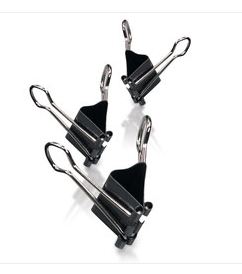
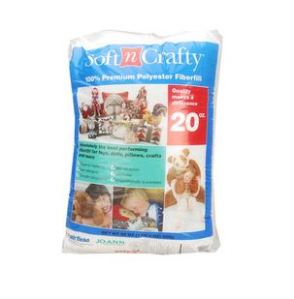
Two items not mentioned in the previous articles that I use specifically for making pillows are binder clips and synthetic fiberfill. Very easy to get at your local Wal-Mart and / or Office Depot. For sewing a pillow, you must have the  binder clips or something like them. You'll see why. Let's not be anal about the size. Whichever size you think will work for you. I prefer the 3/4 in size because sometimes gluing requires a bit of precision. Just not so much with a leather pillow.  For stuffing you can use synthetic fiberfill or down. I've worked with both and although down feathers are a hassle, the results are amazing. If you decide to work with down feathers, save yourself some trouble and do your pillow stuffing outside in a windless area. Then you don't have to worry about the clean up. (Down vs synthetic fiberfill. Over time synthetic will always compact. Down feathers will never ever compact. )


[caption id="attachment_791" align="aligncenter" width="242" caption="Binder Clips 3/4 in."][/caption]


[caption id="attachment_794" align="aligncenter" width="294" caption="Synthetic fiberfill 20 oz."][/caption]


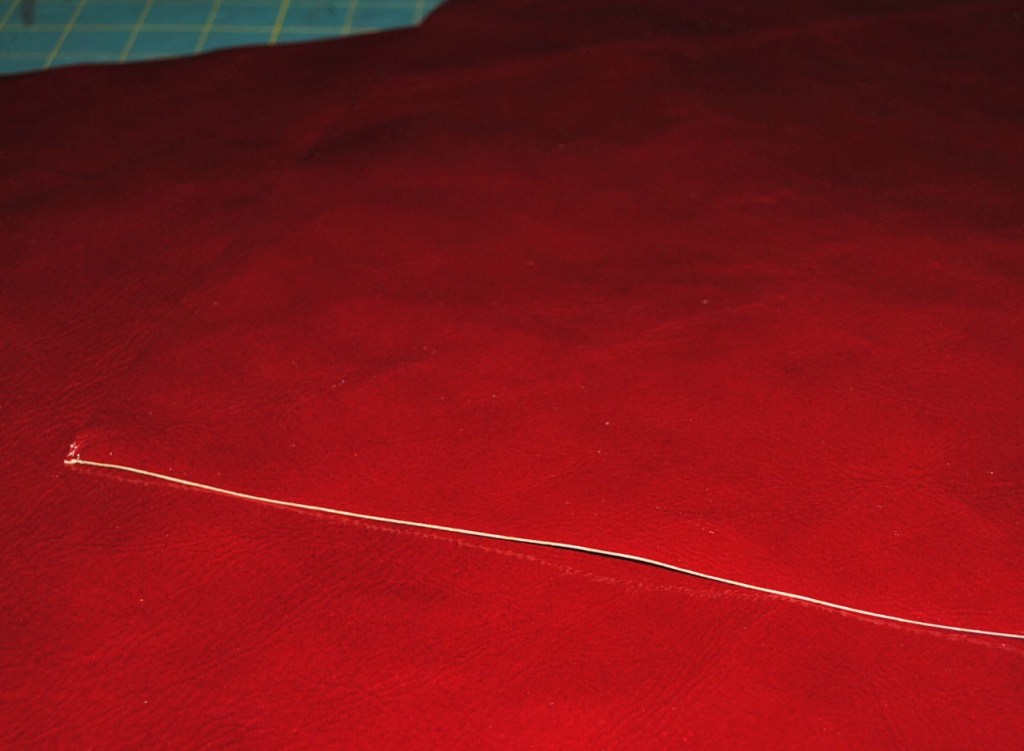
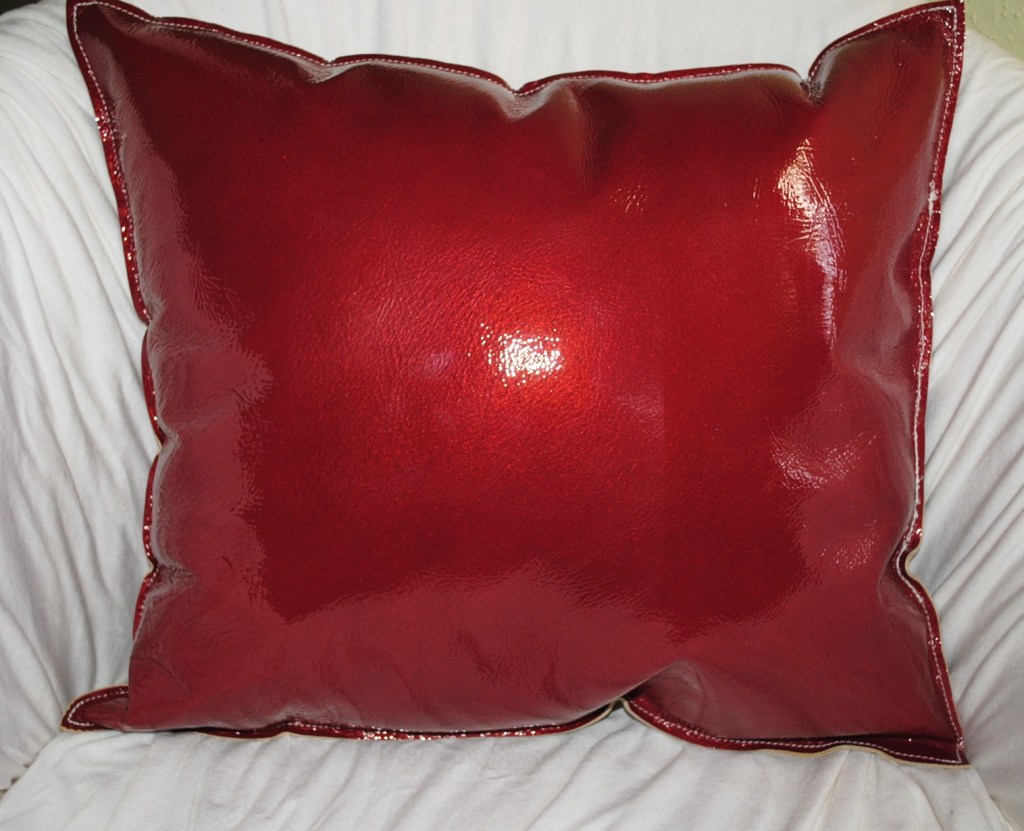
This project is for a leather pillow. I've made mine 16x16 which is 3 and half square feet of leather. Make sure you get extra due to the irregular shape leather comes in.  Remember, you  will need two pieces in what ever size you decide to make. My leather of choice is a red patent leather pigskin. Pigskin is usually thin enough to sew on a regular home sewing machine. The temper of my leather  is medium firm. The great thing about patent leather is that is super easy to clean. Just wipe off. Stain proof and spill proof. Short of dunking it in water, it's waterproof. The finish is waterproof . Don't try dunking it in water as it is not water tight. The bad thing about working with patent is that it is very tacky and may not move well under your sewing machine. A walking foot is a must, but even that is not going to help much. You won't have as much of a problem sewing it up before you stuff, as you will after you stuff it. But even so, it's going to stick. So for your first leather pillow project, I would say, skip the patent leathers. Here's the list of things I used.


leather sewing needle


2 leather squares 16 x 16 in.


contrasting white thread


Elmer's rubber cement


Aleene's all-purpose glue


10 binder clips


synthetic fiberfill or down feathers


Step 1) Cut out two pieces of leather in whatever size pillow you're going to make.


[caption id="attachment_780" align="aligncenter" width="430" caption="2 pieces 16 x 16 in red patent leather"][/caption]


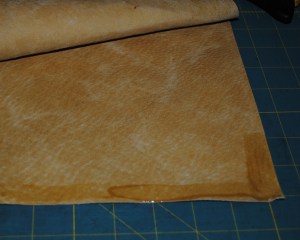
Step 2) Glue suede sides together using the Elmer's rubber glue.  Why the rubber glue? This glue is permanent only when you want it to be. It will hold everything in place until you get your pieces sewn together. That's all you need right now. Without the glue, leather tends to slide and bunch up on itself when sewing it. Don't try to use the Aleene's glue. It's too strong. When you go to try to pull about the excess glued areas from the inside of the pillow,they aren't going to come loose. Pay close attention to gluing the corners and leave an 8 in opening on any one side so that you'll be able to stuff it later. Do not leave a corner open. Let the glue dry at least 3o mins before going to the next step.


[caption id="attachment_781" align="aligncenter" width="300" caption="Suede side of leather"][/caption]


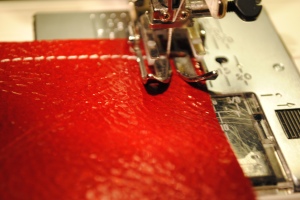
Step 3) Sew around the entire pillow, starting at where you left the pillow unglued and work your way around to the other side of where you left your opening.  You need to use a leather needle. Set your tension to around 4 and adjust accordingly. I would suggest sewing a test piece first to ensure that your tension is correct. If you're working with pigskin start with a #4 stitch length. If you're using lambskin you can use a smaller stitch length. (Only go with cowhide if it's thin. No thicker than denim or your sewing machine may not be able to handle it.) As you take each of the four corners, be sure to make your turns with the needle down. Go slow. Take your time.  Leather does not forgive like fabric. You don't want to stitch a mistake because the needle holes are forever.


[caption id="attachment_782" align="aligncenter" width="300" caption="Stitching the corners carefully"][/caption]


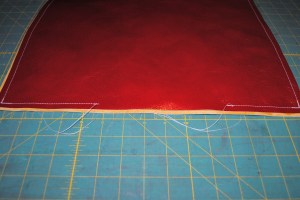
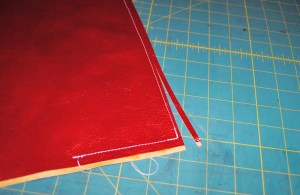
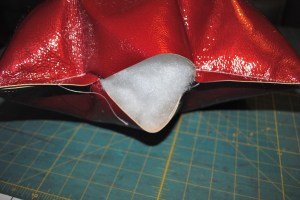
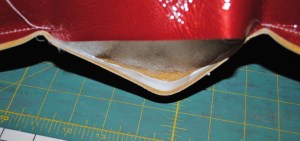
Step 4) Be sure to leave an opening about 8 in wide on one side. Note... I put in a lock stitch at both ends of the opening to keep it from spreading while I stuffed the pillow. This is where you need to also take time to trim all three closed edges just to neaten it up. Not too close to the stitch. Run your hand along the inside to pull the glued areas of the pillow loose so that your pillow can be stuffed all the way to the stitching. Here is also the reason you've used Elmer's Rubber Cement. With a little pulling, those over glued areas of the leather will just come loose.


[caption id="attachment_783" align="aligncenter" width="300" caption="Area left open for stuffing pillow."][/caption]


[caption id="attachment_784" align="aligncenter" width="300" caption="Cut edges to neaten it up."][/caption]

Step 4) This is where you add your stuffing of choice.  Stuff to the capacity that you feel comfortable with. Don't over-stuff it. You'll know if you've overstuffed it if you can't get it to close. An overstuffed pillow won't sit up.


[caption id="attachment_785" align="aligncenter" width="300" caption="Stuffed pillow"][/caption]


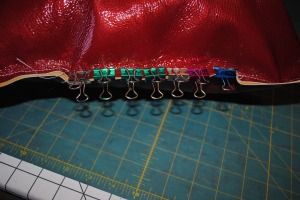
Step 5) Add Aleene's glue to the lip opening. Be neat about it. Once you close up using this glue, you won't have a way to pull apart the excess glue from the inside of the pillow. Use the binder clips to hold it closed until dry. Be sure there is no fiberfill sticking out as this will weaken that area and it won't be glue closed correctly.  Don't try to use the Elmer's glue. It's not strong enough to hold the pillow closed while you're sewing it. The Aleene's, once dry will be permanent enough for you to stitch the edge by machine without having the leather sliding on you. Wait an hour before going to the next step.


[caption id="attachment_786" align="aligncenter" width="300" caption="Glue at the lip of the opening"][/caption]

[caption id="attachment_787" align="aligncenter" width="300" caption="Using binder clips to hold it closed."][/caption]

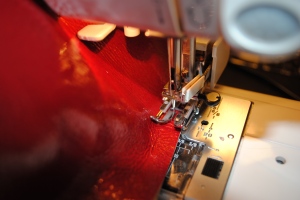
Step 6) Once the glue is dry, remove the clips and stitch that area closed either by hand or machine. I usually stitch it closed with the machine, but this is not always easy to do due to the bulk of the pillow. Use whichever method you think will work best for you. As you know, I was working with patent leather so I had a very hard time getting it closed. Ultimately, I had to use masking tape to smooth the feed. See my article on that particular update.

http://finethreadz.wordpress.com/2010/11/14/that-patent-leather-pillow-is-driving-me-crazy/

[caption id="attachment_788" align="aligncenter" width="300" caption="Trying to sew the damn thing closed!!!!"][/caption]


Step 7) If you got your closed easily and smoothly... well you're ahead of me. After screaming, throwing my hands up and turning my back on the issue for over a week, I finally got up the nerve to finish it. After you get it closed, be sure to trim that last side so it's nice and neat. Mine didn't come out as nice as I'd hoped, but the hell with it. I've got  other stuff to do! LOL!


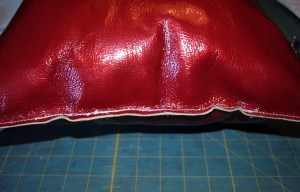
[caption id="attachment_795" align="aligncenter" width="300" caption="Closed, trimmed and neatened up!"][/caption]


Project is done. As always, if I've forgotten to add something, please let me know. And to see the pillow, listed on Etsy .... Feel free to buy it! LOL!


Now that I've finally got that super easy project out of the way, I think I'm finished with my How to Sew Leather series for a while. Right now I'm working on a leather jacket. I bought this white lambskin leather direct from my contact, Fadi, in Italy a few months ago and never got around to working on it till now. Now that I've got it all cut out and I'm sewing the pieces, I should be finished in a week. I'll be sure to add pictures to my blog so that you all can see it for yourselves.


SharonH


Wednesday, November 3, 2010

How to Sew Leather - Project 1 - Japanese Obi Belt

I had to do a bit of revising to this article! A reader brought it to my attention that certain info was missing, like what tension setting, stitch length, etc. Dah! Of course I should have mentioned all this. Just like I said in the very first article. I would probably miss things like that because my machine is already set to the heavy stuff and I rarely think about it. So let's go over this one more time. Or as many times as needed so that everyone gets a better idea of how to sew leather.


This lesson is going to jump off assuming you've already got all of the things you'll need to sew leather from an earlier article in my blog. So for this project we have some pebble grained leather. You are using a leather needle only. This is how to make a Japanese Obi Belt. It's very easy to make. If you managed to get a piece of lambskin or pigskin and it's softer than you'd like it to be, it's okay to add a stiff interfacing or fabric backing if you like. Since I'm using cowhide to demonstrate this project, it's already as stiff as I'd like it to be. Keep in mind, my sewing machine is an industrial model, so it can sew thicker leathers. It's already set for leather and has an automatic tension. If you're using a home machine, you might want to stick with the softer leathers that I mentioned in my first article. This lesson will also assume you know how to sew.  This belt will fit a size S to M.


There are many ways to make an obi belt. I encourage you to explore other ways to make your belt in a design that suits your style. Me. I don't embellish leather much.  I rarely use linings or backings. I prefer it raw and natural looking. However, once you're gotten the gist of it, seen how easy it is to do, you can embellish with leather flower, metal studs or even buttons to achieve different looks.


Here I have cut out 4 pieces of leather.


4 x 4 in square     4 x 24 in rectangle  (2) 1 x 24 in strips


Cut the 4 x 4 square on the diagonal. Now you have two triangles that go on each end of the 4 x 24 in rectangle.


One triangle is glued all the way across the end of the rectangle. Use the Aleene's glue for this project.


For the second triangle, you want to leave an 1 1/2 in gap in the middle that your strips can fit through.


Try to be neat with the glue but don't worry about the excess right now. Make sure that the triangle is overlapping the 4 x 24 in rectangle. This is where we will make our nice neat connections with the sewing machine.


Now glue the 1 x 24 in strips to both end points on the belt. Make sure the point is overlapping the strip just as the triangle is also overlapping 4 x 24 in rectangle.


I was working on two different belts at the time. .


Now you can cut off those funny little tips at both ends of the triangle to make everything flush even.


Here's where I sewed the leather strip to the point in a triangle formation, just to be sure it was secure and supported on all sides. Start your tension at 3 or 4 and try sewing a test piece first. Notice if it looks great on the top and loopy at the bottom, increase your tension in increments until the loopy bottom goes away and you have a nice even stitch on both side. For sewing most leathers you really want to use a larger stitch length, 3 to 4 is the range I stay in. Any lower and you may cause the leather to perforate and it may split over time. Any higher and the thread may loosen over time. Be sure that your glue is completely dry before you begin stitching as it will gum up your needle and thread causing your stitches to look shabby. As for speed. Set your machine to the lowest speed until you get a feel for the particular type of leather you're working with. It's important to be patient and go slow because any needle hole you put in leather is in there forever. So this has to be done right the first time. If your leather is thick and your sewing machine is not industrial or industrial strength, you may have to go a little bit faster just in hopes that your machine will have the strength to pierce a thicker leather. Two factors will help. Completely dry glue will act as a stabilizer giving you smoother stitching. And a leather needle is a must in this situation.


Here's where I closed up one of the points leaving that 1 1/2 area opened for the strip to fit through.


On this end I sewed the entire side closed. Only one side will need a slit for the strip to fit through. It doesn't matter which side you choose.This is where you can also take a moment to fit the belt and adjust the strips to a shorter length as needed.


You're almost done. All you need to do now is a finish. Here's where you cut off all the excess threads and pull away all the dried up glue.  The glue was used to hold everything in place so that you could sew it evenly. Once you put in the stitching, the thread will hold everything in place, so do a good clean up job on the dried glue.


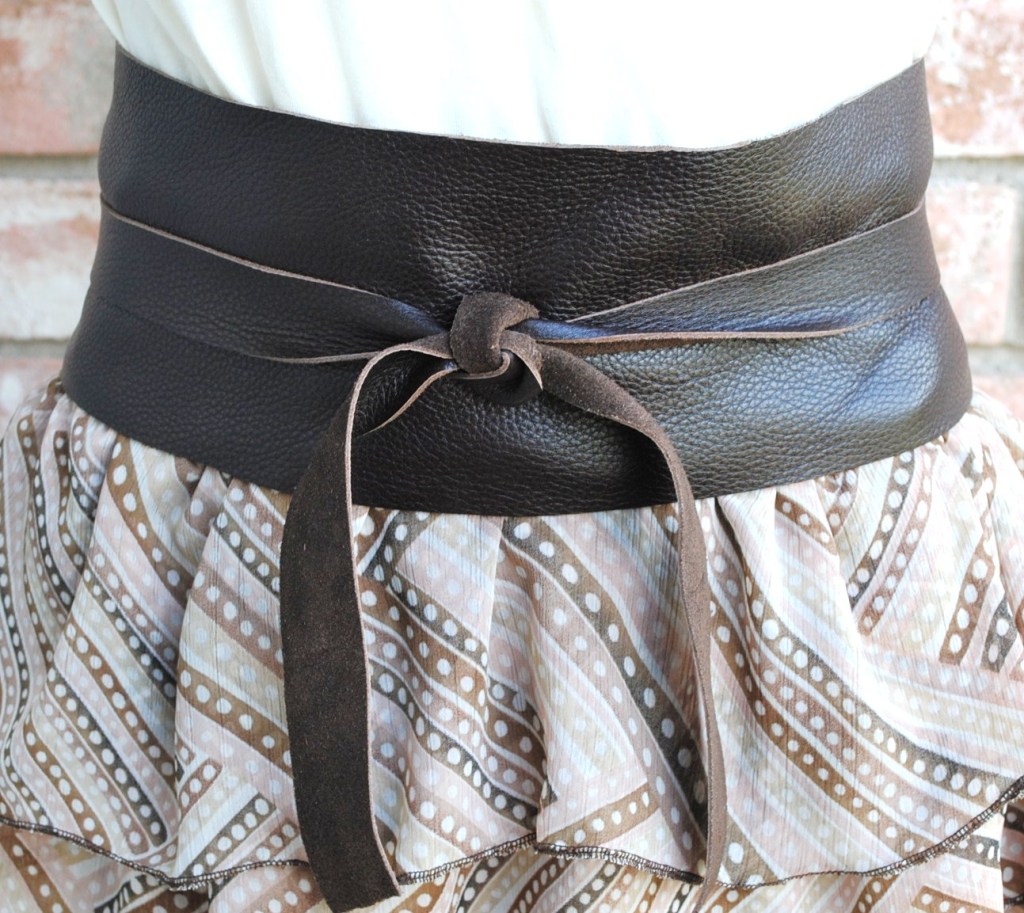
[caption id="attachment_736" align="aligncenter" width="1024" caption="Japanese Obi Belt - Bittersweet Chocolate"][/caption]


Here's what one of my belt look like once finished. Gorgeous. You can click on this picture to see it on my site.


If you have any questions feel free to ask. As you can see, this doesn't take a lot of leather to make, but I did used a high-end leather because I wanted something with a gorgeous grain. Even though the picture shows two different leathers, how I made this belt was the same for both of them.


One last tip about sewing with leather... I have been able to surge the edges, using my serger sewing machine, of the thinner leathers like lambskin and pigskin. It usually will cost me a needle or two in the process, so have extras on hand if you're the courageous sort that will dare anything. (like me). Just be aware that it could actually perforate the leather and split over time. Be sure that you use Aleene's glue as a stabilizer. This may help offset future splitting and make the entire seam stronger. Thank you.


SharonH


Sunday, October 10, 2010

One Hell of a Week - Update

First off I want to let everyone know that we had a death in the family. My aunt, whom I was very closed to passed away after a long battle to stay alive. She'd been in the hospital for weeks. She fought so hard. We would go visit her and her fist would be clenched. She didn't want to die, but she was called home anyway. And I miss her so much. Okay enough of that... I'll start crying again.


Club activities have kept me busy. And designing, of course. Yesterday I finally created my first leather belt project, but I'm not too pleased with it. I was going to embellish it later with silver studs. I can't find my studs.


Teal Tassel Belt


I took detailed pictures of how to do the belt. I love the color and I love the tassel. I also like how I made it long enough to wrap around twice.  Very simple to make.  What I don't like are the pictures. I didn't have any jeans to put on Amanda, so the color of the clothes on her above, don't do the teal color any justice. Anyway the belt is fun and easy to do. Can be done on a regular sewing machine. When I compile it all together into a lesson, I will offer a giveaway to the first person who comments on my blog, enough d-rings to do this project.


I am working on another belt, but it would definitely be considered an advanced project. It's with hair on cowhide leather and many of the home sewing machines couldn't handle it. A heavy duty could handle some cowhide, if it's not too thick and if you use a leather sewing needle. Unfortunately, for this project, I'm using hair on cowhide leather (That stuff is always thick, has to be to hold the hair in), backed by vinyl. I'm adding a plastic tortoise shell buckle and I'm using special leather punches to create the holes. So I can't teach this one. I rarely ever work with lambskin so I don't have much of it on hand. I prefer cowhide because it is thick and you don't have to use a stabilizer to stiffen it.


SharonH


Wednesday, September 22, 2010

Sewing With Leather - Part 1

I initially said I would write an article on how to sew leather, so here is Part 1. I decided to do this in parts to first give you an idea of what you will need, why you will need these things, and where you can go to get them. Also there are things that you must know before you decide on what you want to work with.


Leather


There are so many different types of leather out there. More than I can go into in one little article. So mainly I'll talk about lambskin and pigskin. These are the two types of leather that are usually thin enough to be sewn on a regular home sewing machine. Some cowhide has been split and may be thin enough, but for the purpose of learning I'll stick with the other two leathers. Lambskin is usually soft and luxurious feeling. It can often feel rubbery in its strength. It's not easily torn. Pigskin may come thin, but that doesn't always mean it's soft. We call that the temper. Pigskin could be thin as paper, while the temper is that of....plastic sheeting.  So if you choose a pigskin make sure that is has a very soft temper. Also worth noting about pigskin. No matter what the temper, if it's thin, when sewn, those little holes can behave like perforations and it could potentially split where you put the stitching. Starting to make lambskin sound like the leather of choice, right? So for the sake of the rest of my instructions, we'll assume you've chosen lambskin.


Measurements


Leather is measured and sold in square feet, not yards. So if you wanted to make a leather jacket and needed 3 yards, you would need to have 27 square feet of leather. Sounds simple? Not. Animal skins don't come out of the tanneries in nice squared measurements. It's in irregular shaped pieces with a lot of funny edges that you won't be able to use. So I usually recommend hedging up quite a bit. If I were going to make a leather jacket and I needed 27 square feet of lambskin, I would probably order 50% more. So I'd order about 40 sq ft.  Lambskin usually comes in 5 to 12 sq ft increments. So if I can find 5 skins that are at least 8 sq feet, that should be enough to do the job. What's the use in learning how to sew leather if you can't use this knowledge to make yourself something awesome?


Where to buy.


Ebay is a wonderful source for leather if you can't afford some of the larger tanneries here in the US.  Remember to make a leather jacket , you're going to need 40 square  feet of lambskin that all has the same color, texture, temper, grain and skin size. For that much leather, we may have to go to Italy! You'd have to be living under a damn rock not to know Italy's well deserved world-renowned reputation for fine leather.


[caption id="attachment_390" align="aligncenter" width="300" caption="Rolipel Italia's Metallic Purple Lambskin"][/caption]
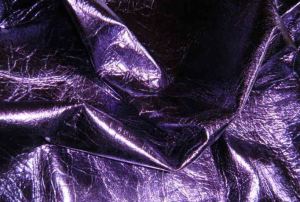

My most favorite seller for leather in Italy is Rolipel. I have personally dealt with him since he started selling on Ebay. He will be the one to go to if you decide to tackle a big project such as a leather jacket. If you need more than what he has listed on Ebay, all you need to do is contact him and he will try to get you what you need. Price wise, he's not that much different from what you can find in the states, but as far as uniform quality, he's the best I've encountered in my 7 years of working with leather. He also goes out of his way to keep shipping affordable.


[caption id="attachment_391" align="aligncenter" width="300" caption="Leatherwise - Teal Cowboy Motif"][/caption]

But what if you're doing a smaller project? I've got just the supplier for you! Ross at Leatherwise located in Santa Cruz, California is your man. I'll just be honest with you and say, I never would have learned leather so easily and seamlessly without Ross. Seven years later and I still go to this man for advice. He sells in smaller increments. He always has a lot of exotic pieces and once again on Ebay, he's quite accessible.


Okay, say we've chosen our leather. What else will we need?


[caption id="attachment_392" align="aligncenter" width="217" caption="Elmer's Rubber Cement"][/caption]
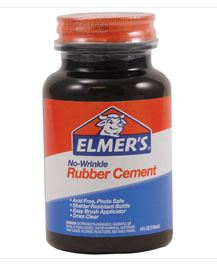


Elmer's Rubber Cement -  You can't pin leather, and you can't sew it if it's not pinned. Without something to hold it in place the finishes will rub and slide on you when you attempt to sew it.  We only use this glue if we're sewing grain to grain because once dry the excess just rubs off. (Must have this glue when sewing leather clothing, handbags, and such.)


[caption id="attachment_394" align="aligncenter" width="138" caption="Aleene's Tacky Glue"][/caption]
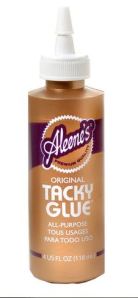

Aleene's Tacky Glue is used for gluing leather to leather, grain out, like for a belt or pillow. Get both types of glue and you'll be ready to sew anything you want to make.


[caption id="attachment_395" align="aligncenter" width="187" caption="Schmetz Leather Needles"][/caption]
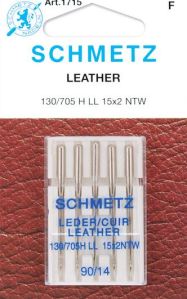

The Schmetz leather needles are a must!  The head is large and sharp enough to pierce leather where other sewing machine needles can't.


Rotary Cutter or super sharp scissors. I prefer a rotary cutter for cleaner edges than you get with scissors. I would recommend a scalpel, but they tend to dull very quickly when cutting leather.


Lastly, you will need 100% polyester thread. No cotton. The acids in leather will eventually eat away at cotton thread, weakening it over time.


So here's the list.


Leather


Glues


Needles


Thread


Sharp Cutters of your choice


I have also given you sources where you can go to find all of these items. Just click on the pictures as they are direct links.  And if you have other sources in mind other than those that I've mentioned, please feel free to use them. If you have any questions, please don't hesitate to ask. I have been working with leather such a long time, so I may well have missed something that I've long since started taking for granted. I'll wait a couple of weeks before writing the second part. This will give most of you enough time to get your supplies together and also decide on what you'd like to make. For my demonstration, I think I'd like to make a belt. Once I've come up with a design, I'll write an article on the exact items I will be using. Stay tuned!


SharonH


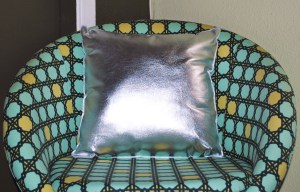
ps Here's a pillow that I made with leather for my leather shop. This is a silver lambskin. Metallic Silver is the rarest of all leather colors, hardest to find and probably the most expensive to buy. Notice, I even managed to surge the edges without busting up my machine!


[caption id="attachment_404" align="aligncenter" width="300" caption="Metallic Silver Lambskin Pillow"][/caption]

Useful conversion chart - http://www.onlineconversion.com/area.htm